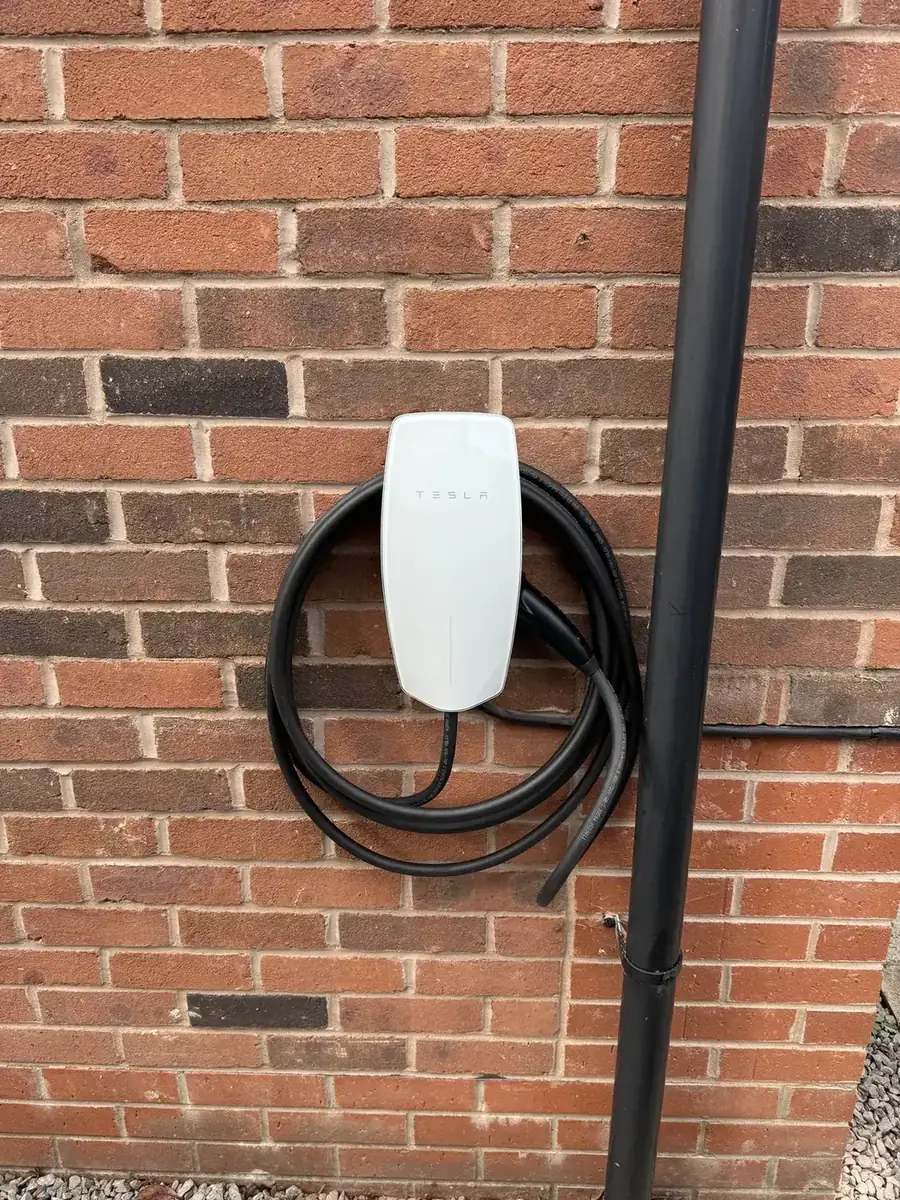
A home EV charger in York typically costs £500 to £1,500 fitted. A 7kW charger fills most cars in four to eight hours, smart chargers such as Hypervolt, Zappi and BG Sync let you charge on cheap overnight tariffs, and planning permission is not usually needed, although your Distribution Network Operator may need to be notified.
Charging an electric car from a normal three-pin socket with the lead that came with it is slow. A proper wall charger is the answer, and getting the right one fitted in the right place makes the car far easier to live with. This guide covers what it costs, how fast it charges, which chargers are worth your money and what actually happens on the day.
What a Home EV Charger Costs
A home EV charger in York typically costs £500 to £1,500 supplied and fitted. That is a wide range because no two driveways are the same. The things that move the price are:
- The charger itself: Smart chargers vary in price depending on the brand, features and whether you want a tethered cable or a socket.
- The cable run: A charger on the outside wall right behind the consumer unit is a short, simple job. A charger at the far end of a drive, or on a detached garage, needs a longer run of armoured cable and sometimes a trench.
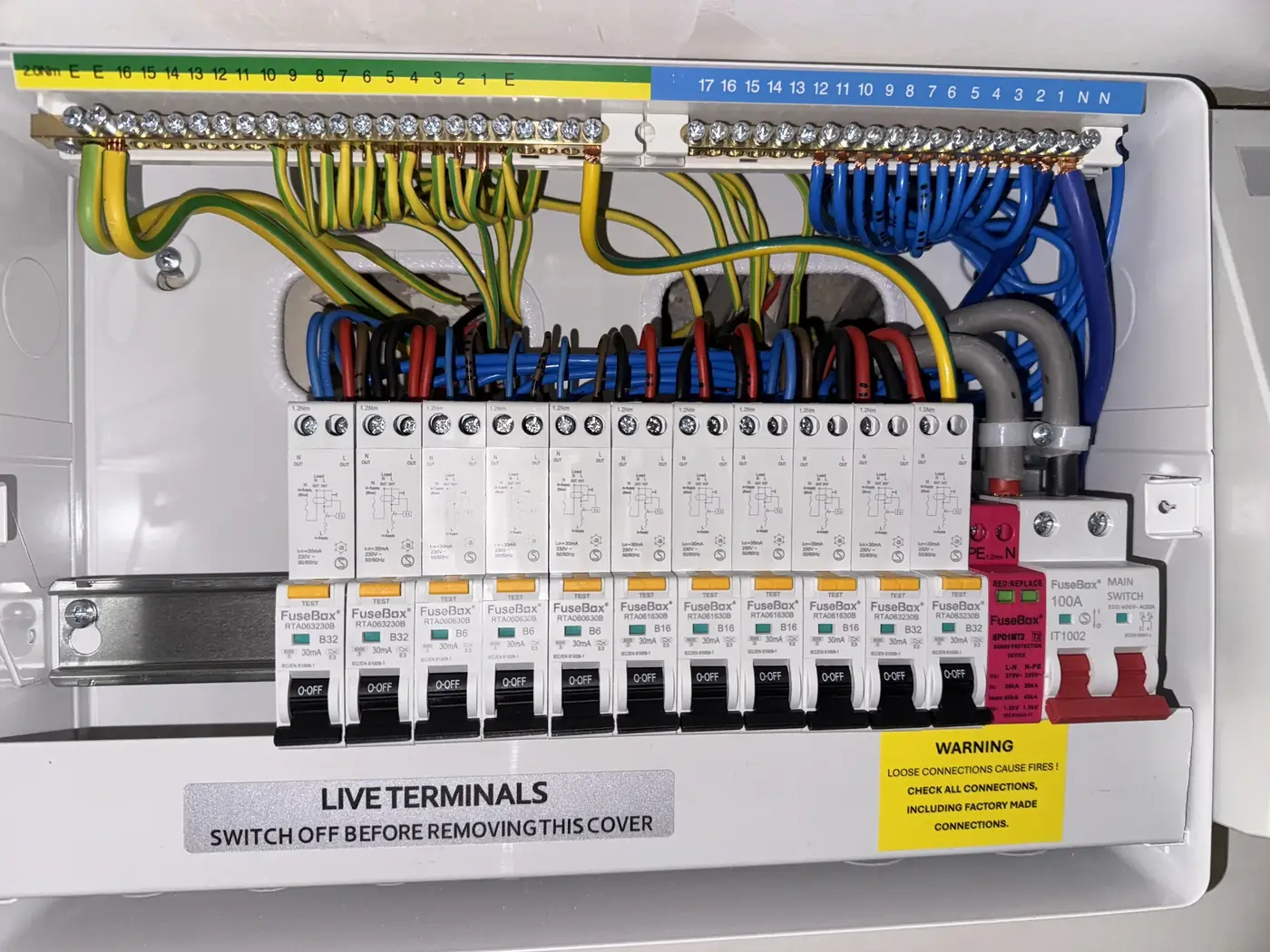
- Your consumer unit: The charger needs its own circuit. If your board has no spare way, or it is an older board without suitable protection, it may need work first.
- Your supply: Henry checks the incoming supply and main fuse to make sure the house can take the extra load alongside everything else you run.
You get a clear quote before any work starts, so you know exactly what you are paying for.
How Long Charging Takes
Most homes have a single-phase supply, which means a home charger tops out at around 7kW. A 7kW charger fills most cars in four to eight hours, depending on the size of the battery and how empty it is. In practice that means you plug in when you get home and the car is full by morning.
That is much quicker than a three-pin plug, and it is also kinder to your wiring. Household sockets are not designed to deliver a heavy load for hours on end, night after night, which is why a dedicated charger on its own circuit is the safer long-term option. Faster 22kW chargers exist, but they need a three-phase supply, which very few houses have.
Choosing the Right Charger
There are a lot of chargers on the market and they are not all equal. Henry recommends a small number he trusts, including Hypervolt, Zappi and BG Sync. A few things to think about when you choose:
- Tethered or untethered: A tethered charger has the cable fixed to the unit, so you just pick it up and plug in. An untethered charger has a socket and you use your own cable, which looks tidier on the wall but means getting the cable out of the boot each time.
- Smart features: New home chargers in the UK have to be smart. The useful part is the app, which lets you schedule charging for cheaper overnight hours on an EV electricity tariff and see how much energy you have used.
- Where it goes: Think about where you park and which side your charging port is on. A charger in the right spot means no trailing cables across the drive.
Thinking About a Home Charger?
Call Henry on 07495 813843 for a free quote on EV charger installation across York and North Yorkshire. He will look at your supply and board and recommend the right charger for your car.
Call for a Free QuotePlanning, DNO and Regulations
There is a bit of paperwork behind a charger install, but it is handled for you.
- Planning permission: Not usually needed for a wall-mounted charger on a house. Listed buildings and some conservation areas can be different, so mention it when you get a quote if that applies to you.
- DNO notification: Your Distribution Network Operator, the company that runs the local electricity network, needs to know about a new charger. In some cases they need to approve it before it goes in. Henry manages this for you.
- Building Regulations: A new circuit for a charger is notifiable work under Part P. As a NAPIT-registered electrician, Henry can self-certify the work, so you get the right certificate without having to involve Building Control yourself.
- Wiring Regulations: The installation is designed and tested to the current 18th Edition Wiring Regulations, including the specific requirements for EV charging and earthing.
What Happens on Installation Day
- A look at your setup first: Henry checks your supply, consumer unit and earthing, agrees the charger position with you and plans the neatest cable route.
- Fitting: The charger is mounted, the cable is run and fixed neatly, and a new protected circuit is added at the board. The power will be off for part of the work, and Henry will tell you when.
- Testing and commissioning: Every circuit is tested and the charger is commissioned before handover.
- Handover: You get your certificates for the work.
If you are not sure where to start, see the EV charger installation page or get in touch for a free quote.
Frequently Asked Questions
Not usually. A wall-mounted charger on a house is normally fine without planning permission. If your home is listed or in a conservation area, check before you go ahead, and mention it when you ask for a quote.
Sometimes. The charger needs its own protected circuit, so the board needs a spare way and suitable protection. Henry checks this before quoting and will tell you honestly if anything needs doing first. If it does, a consumer unit upgrade can be done at the same time.
It comes down to convenience. A tethered charger has the cable attached, so you just plug in. An untethered charger looks tidier, but you use your own cable each time.
You can, but it is slow, and household sockets are not designed for a heavy load for hours every night. A dedicated charger on its own circuit is quicker and safer, and the smart features let you charge on cheaper overnight rates.